
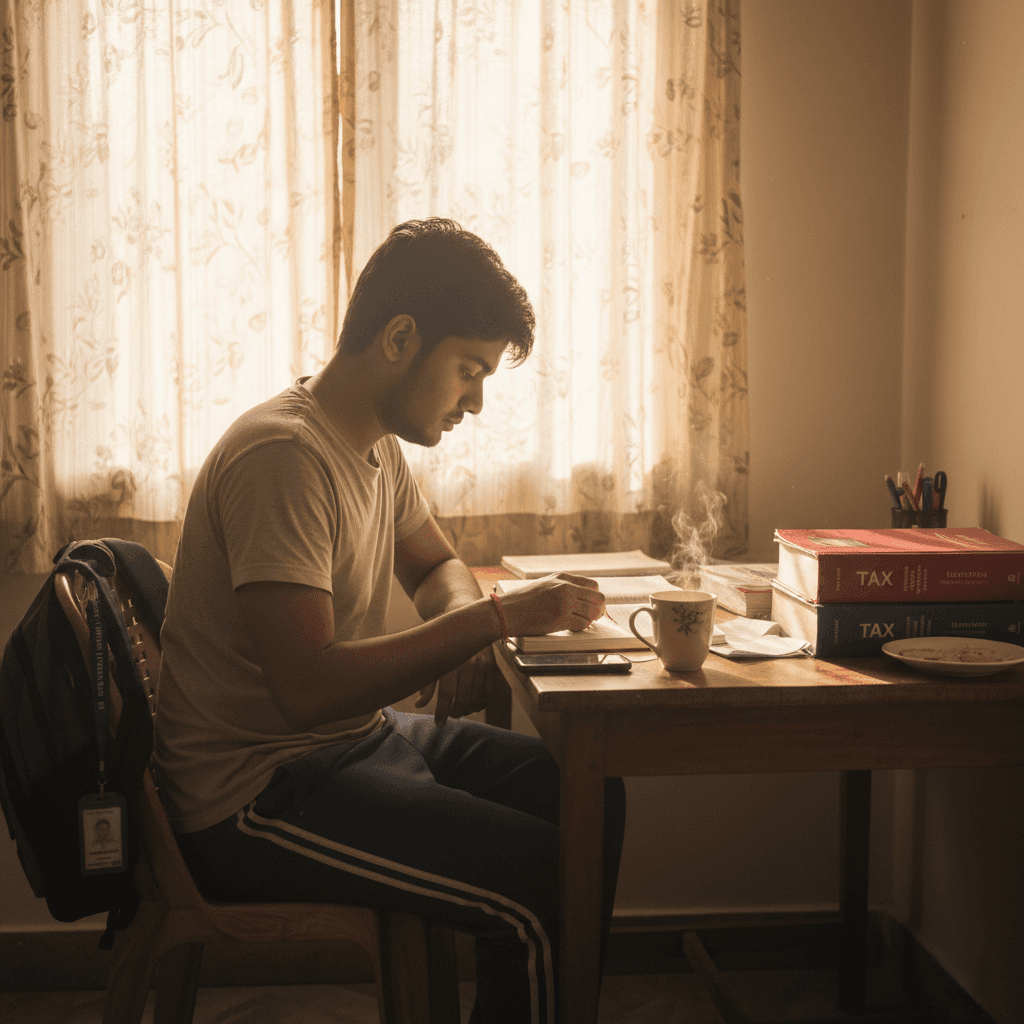
Balancing articleship and CA studies is one of the most exhausting phases of the course. On paper, it looks manageable: office during the day, studies in the evening. In reality, it often feels like there is never enough energy left for anything else.
Many students assume that feeling constantly tired is part of the process. While some level of pressure is unavoidable, ongoing exhaustion and mental fatigue are signs that something needs to be adjusted. The goal is not to study endlessly, but to study in a way that can be sustained for months.
Accept That Your Situation Is Different
One of the biggest mistakes students make is comparing themselves with full-time students. Articleship demands time, attention, and mental effort. Even if the work is repetitive, it consumes energy.
Expecting yourself to study for five or six hours daily after office sets you up for disappointment. Instead, aim for consistent, realistic study hours. Even two to three focused hours on working days can be enough when used properly.
Consistency matters more than intensity.
Build Your Day Around Energy, Not the Clock
Rather than following a rigid timetable, it helps to work with your energy levels.
For many students:
mornings are better for learning new concepts,
evenings are better for revision or lighter topics.
If possible, study for 60–90 minutes in the morning. After office, one focused session of 1.5–2 hours is usually more effective than trying to stretch late into the night.
On days when work is hectic, reduce your target. Studying something small is better than forcing yourself and burning out.
A Practical Weekly Structure
Weekdays should be about maintenance, not perfection.
Focus on:
completing small portions,
revising what you studied earlier,
staying connected to the syllabus.
Weekends are where you can:
attempt full questions,
revise multiple chapters,
and build confidence.
Avoid planning unrealistic weekend marathons. Long study hours without breaks often lead to mental fatigue that spills into the next week.
Create a Clear Transition from Office to Study
One overlooked reason students struggle is the lack of a mental break between work and study.
Before opening your books:
change your clothes,
step away from your phone,
take a short walk or sit quietly for a few minutes.
This transition helps your mind shift roles. Without it, you may sit with books for hours without real focus.
Use Articleship to Support Your Studies
Articleship does not have to be completely separate from your preparation.
Where possible:
link practical work to subjects like Audit, Tax, or FR,
note down real examples,
observe how concepts are applied in practice.
This makes studies feel more relevant and reduces the mental gap between office and exam preparation.
Watch for Early Signs of Burnout
Burnout rarely appears suddenly. It builds gradually.
Common signs include:
constant irritation,
lack of motivation,
poor concentration,
feeling guilty even when resting.
For a few days, lighten your study burden when these symptoms show up. Longer pauses later are frequently the result of pushing harder at this point.
Rest is not wasted time. It is part of the process.
Avoid the Comparison Trap
You will come across schedules and stories of students managing extreme routines. What works for one person may not work for another.
Your capacity depends on:
nature of articleship,
commute,
physical health,
and personal responsibilities.
Focus on what is sustainable for you. The goal is to last till the exam with clarity and confidence.
It also helps to remind yourself that this phase is temporary. Articleship and studies running together can feel overwhelming, but it does not last forever. Keeping this perspective makes difficult days easier to handle.
Another thing many students realise later is that balance keeps changing. Some weeks will go smoothly, while others will feel messy. That does not mean your plan is failing. It simply means you are adjusting, which is a normal part of this phase.
Final Thoughts
Balancing articleship and studies is less about discipline and more about awareness. You need to know when to push and when to slow down.
Missing a day of study will not fail you. Burning out might.
Approach this phase with patience. Build routines that respect your limits. When preparation becomes sustainable, results usually follow.